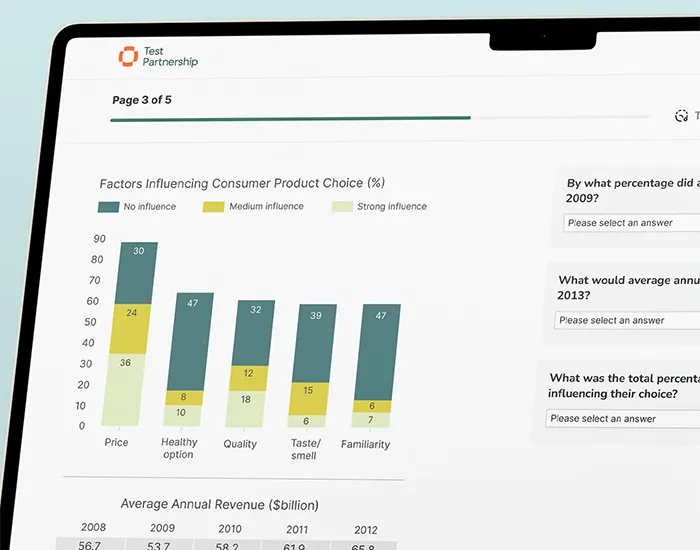
Numerical reasoning
 15 mins
 15 questions
Interpreting numerical information and performing basic calculations.

You've been invited to complete one or more of our assessments. This page explains what to expect, then gives you free practice tests in each format so you can try them before you start.

Through the link in the invitation email from the organisation you're applying to. That email also tells you which assessments you've been asked to complete. Nothing on this page, including the practice tests, counts towards your application.
Every assessment runs in your web browser, on a phone, tablet or computer, and starts with its own instructions and example questions. You choose when and where to take it, before the deadline in your invitation.
There are two kinds. Ability tests, such as numerical, verbal, inductive and critical thinking, are timed and measure how you reason with information. Behavioural assessments, such as personality and situational judgement, are untimed and look at how you prefer to work. They call for different approaches, so it's worth knowing which you've been asked to take.
Timed - Work steadily rather than rushing. Accuracy matters more than speed, but don't stall on one question.
 Use only what you're given - Answer from the information on screen, not from what you assume or already know.
 Expect the difficulty to change - Our ability tests are adaptive: later questions are selected based on your earlier answers. Feeling stretched is normal.
 Brush up on the basics - Numerical tests only use everyday maths: percentages, ratios, and reading charts and tables. The challenge is doing it under time.
 Untimed - Go at your own pace. There's no benefit to finishing quickly and no penalty for taking your time.
 Answer honestly - These measure fit, not ability. Describing yourself as you actually are is in your interest as much as the employer's.
 Take each question on its own - Don't worry about how often you've chosen "strongly agree". Nothing is tracking a pattern across questions.
 Take a break if you need one - With no time limit, a short pause to refocus costs you nothing.
Short practice tests in the formats we use. Pick the ones named in your invitation. Each opens in a new tab.
15 mins15 questionsInterpreting numerical information and performing basic calculations.
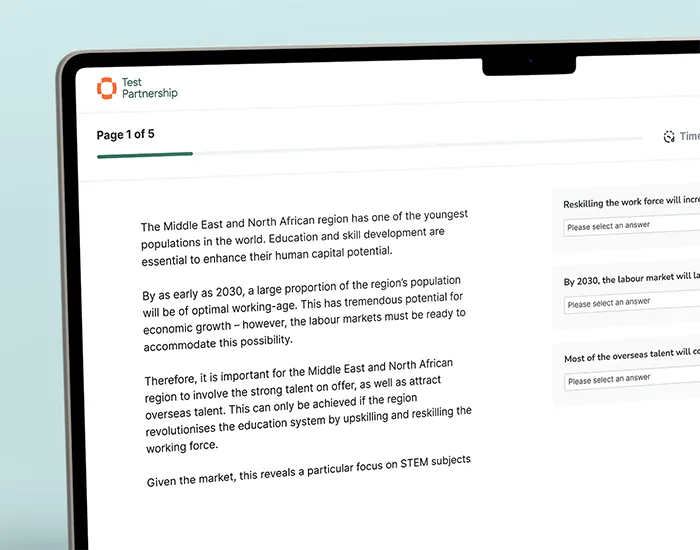 15 mins20 questions
Working with written information and drawing conclusions from it.
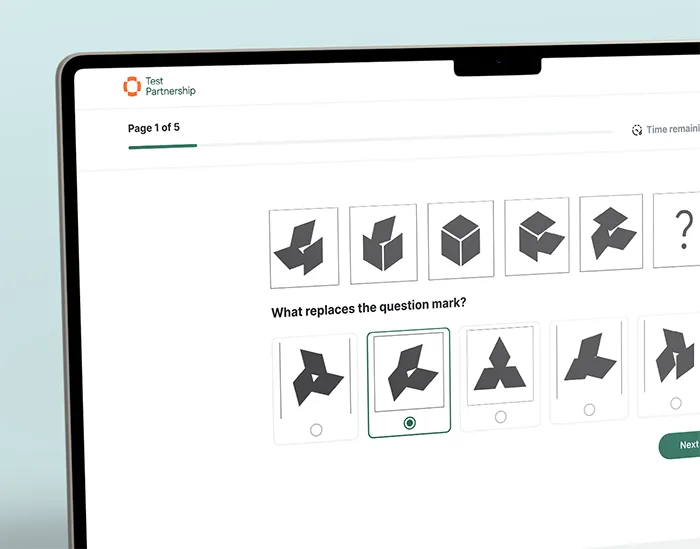 15 mins15 questions
Thinking logically and recognising patterns in sequences of shapes.
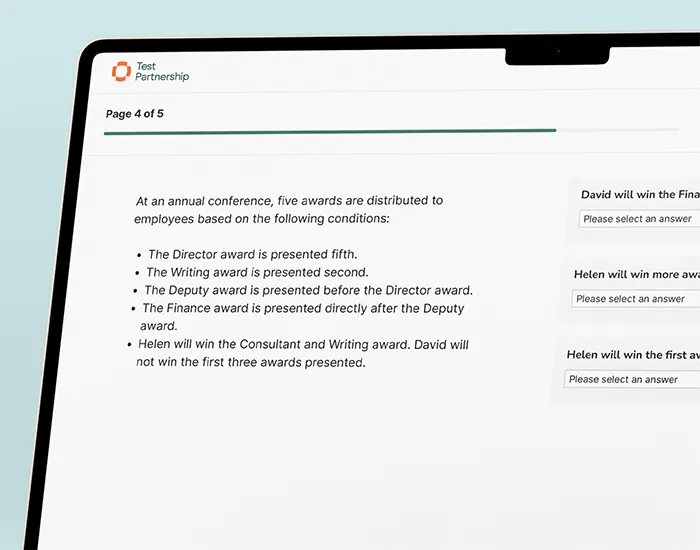 4 mins4 questions
Reasoning from evidence and evaluating arguments.
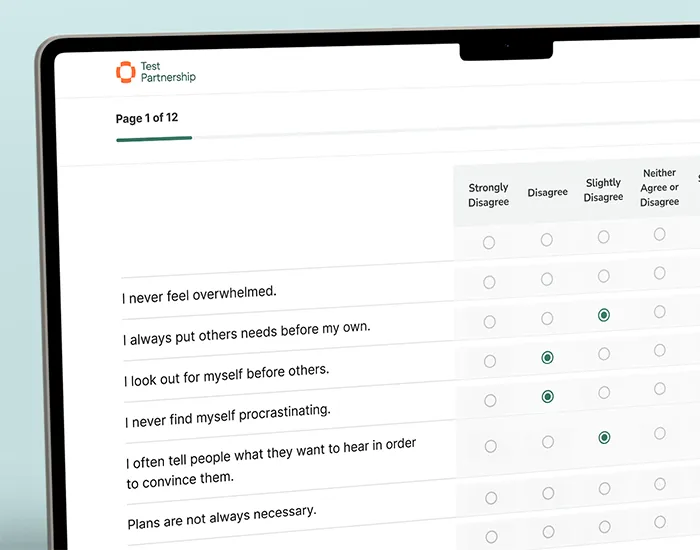 Untimed
Traits, competencies, preferences and behaviours. No time limit.
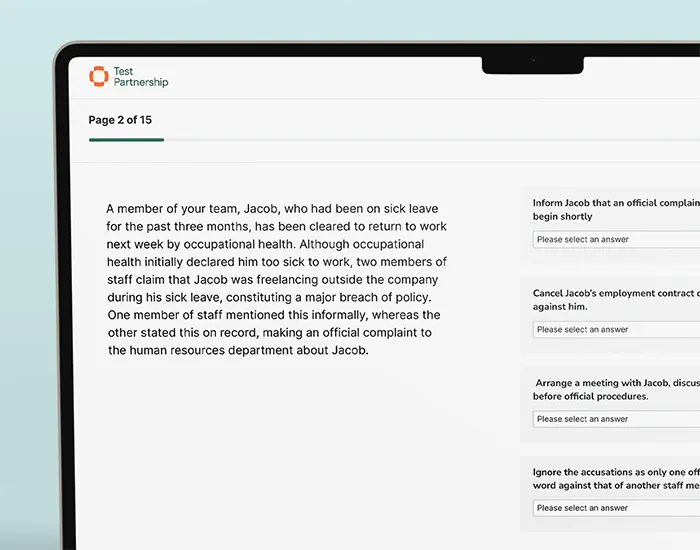 Untimed60 questions
How you'd respond to realistic workplace situations. No time limit.
Game-based verbal, numerical and logical reasoning, 3–6 minutes per test. The demos are on the gamified assessments page.
Practise the formats you've been invited to - Familiarity takes away most of the anxiety, and prepared candidates perform closer to their true ability.
 Check your device - A stable connection and an up-to-date browser such as Chrome, Firefox, Edge or Safari.
Find somewhere quiet - Silence notifications and give yourself an uninterrupted run, especially for timed tests.
Don't leave it to the last day - If anything goes wrong technically, you'll want time to sort it out before the deadline.
Arrange adjustments early - Extra time, screen readers, adapted input devices and other adjustments can all be made, but they need setting up in advance. Contact the organisation you're applying to before you begin.
Check your device - A stable connection and an up-to-date browser such as Chrome, Firefox, Edge or Safari.
Find somewhere quiet - Silence notifications and give yourself an uninterrupted run, especially for timed tests.
Don't leave it to the last day - If anything goes wrong technically, you'll want time to sort it out before the deadline.
Arrange adjustments early - Extra time, screen readers, adapted input devices and other adjustments can all be made, but they need setting up in advance. Contact the organisation you're applying to before you begin.
 Complete it yourself - Assessments are designed to be sat independently, and some employers run a short verification test at interview to check that online scores hold up in person.
We recommend AssessmentDay for professional practice test packs that closely resemble the Test Partnership format.
Your invitation email lists them. Employers choose a combination that suits the role, so it could be one test or several. Practise the ones you've been named for rather than all of them.
No. Practice tests show you the format and give a rough sense of how you did. They aren't compared with other candidates and don't form any part of your application.
Our ability tests are adaptive: later questions are selected based on your earlier answers. Feeling stretched is expected and isn't a sign of doing badly. It also means different candidates see different questions.
Contact the organisation you're applying to before you begin. Adjustments such as extra time need to be set up on your assessment in advance, so don't start the live test until they've been confirmed.