Ensure your tests are fair for colour blind candidates
 3 minutes
Business psychologist, Ben Schwencke, talks about how to maintain accessibility and ensure fairness for colour blind applicants.


Colour blindness is a condition in which an individual has difficulty distinguishing between certain colours. It occurs when the cones (colour-sensitive) cells in the retina do not respond appropriately to particular colours. The wavelength of light dictates the colour the eyes can see. Colour blindness is typically hereditary. The extent of the colour blindness a person experiences can vary with the ability to distinguish some of the colour given the suffix '-anomaly' and none of that colour as '-anopia'.
Each of the colour blindness conditions above are explained in more detail below, including what Test Partnership have done to ensure our tests are accessible for all candidates with these conditions.
3 minutesBusiness psychologist, Ben Schwencke, talks about how to maintain accessibility and ensure fairness for colour blind applicants.
The red cones of the eye are abnormal or completely absent, making red appear darker and harder or impossible to distinguish from green or brown. People with this condition will often confuse red with black and dark shades of brown.
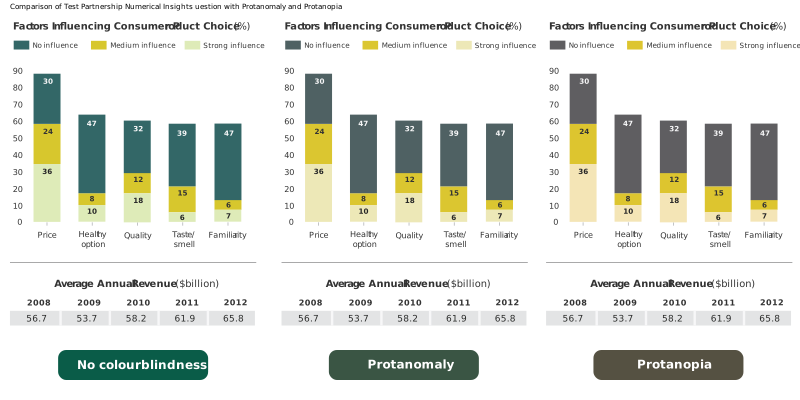
The reds in the original image now appear muted in the images with the Protanomaly and Protanopia. The data is still distinguishable due to the lightness and darkness of the colours chosen.
The green cones of the eye are abnormal or completely absent, making green harder or impossible to distinguish from brown or red.
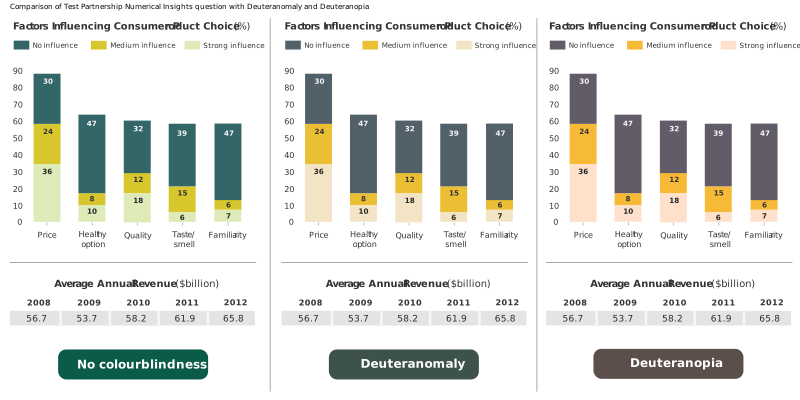
The greens in the original image now appear muted in the images with the Deuteranomaly and Deuteranopia. The data is still distinguishable due to the lightness and darkness of the colours chosen.
The S cones of the eye are abnormal or completely absent, making blues and greens harder or impossible to detect and making it difficult to distinguish dark blue and black. This affects an estimated 1 in 10,000 people, or 0.01% of the population.
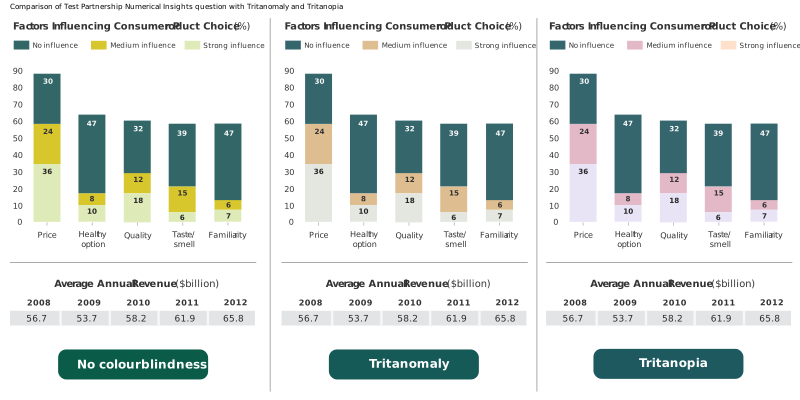
The blues in the original image now appear muted in the images with the Blue-Yellow colour blindness. The data is still distinguishable due to the lightness and darkness of the colours chosen.
A combination of genetic changes affect a variety of cones in the eye from functioning causing an absence of colour detection. This is an extremely rare condition affecting 1 in 30,000 people, or 0.0033%.
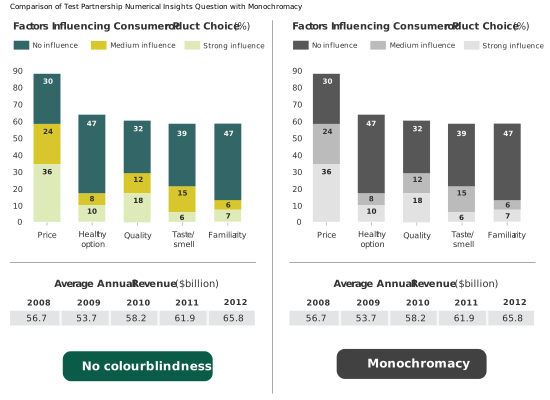
The colours in the original image now appear in greyscale in the images with the Monochromacy filter. The data is still distinguishable due to the lightness and darkness of the colours chosen.
For candidates with colour blindness can use our assessments fairly we ensure:
By combining these checks, we ensure that our assessments are inclusive and accessible, allowing candidates with colour vision deficiencies to interpret visual information accurately and perform on a level playing field. This commitment to accessibility helps eliminate potential disadvantages related to colour blindness, ensuring that all candidates are assessed based on their abilities rather than their perception of colour.

Chief psychologist at Test Partnership. MSc in Organisational Psychology with over 10 years' experience in psychometric testing.
